
Rockenspeil
Discover Rockenspiel by Global Sound Movement: a virtual stone instrument crafted from Cypriot pebbles and sampled in Paphos’s Tombs of the Kings.
Rockenspiel is a practice-based research output developed by the Global Sound Movement (GSM), investigating how naturally occurring materials, culturally significant landscapes and digital technologies can inform contemporary musical instrument design. The project explores the creative potential of lithophones through the development of a playable virtual instrument originating from Aphrodite’s Rock, near Paphos, Cyprus, a location associated with the mythological birthplace of Aphrodite.
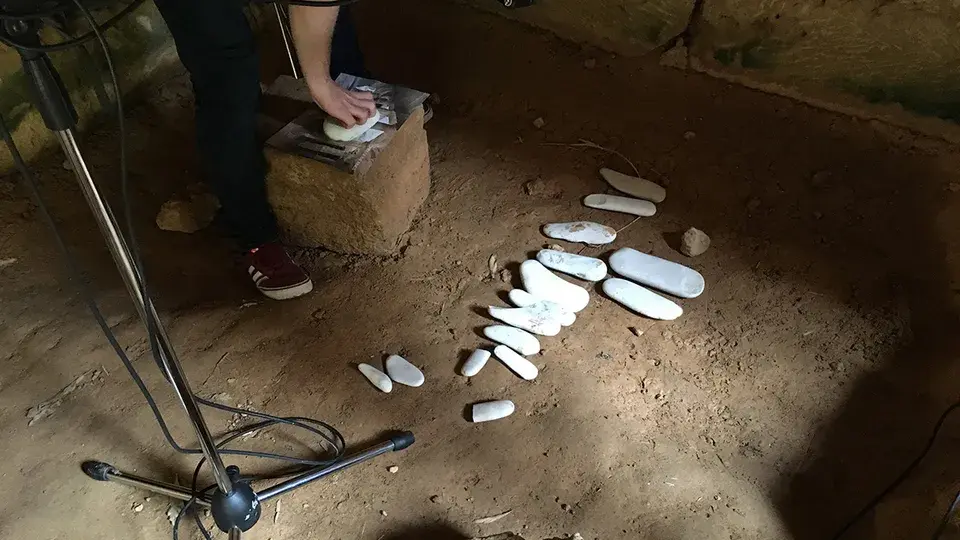
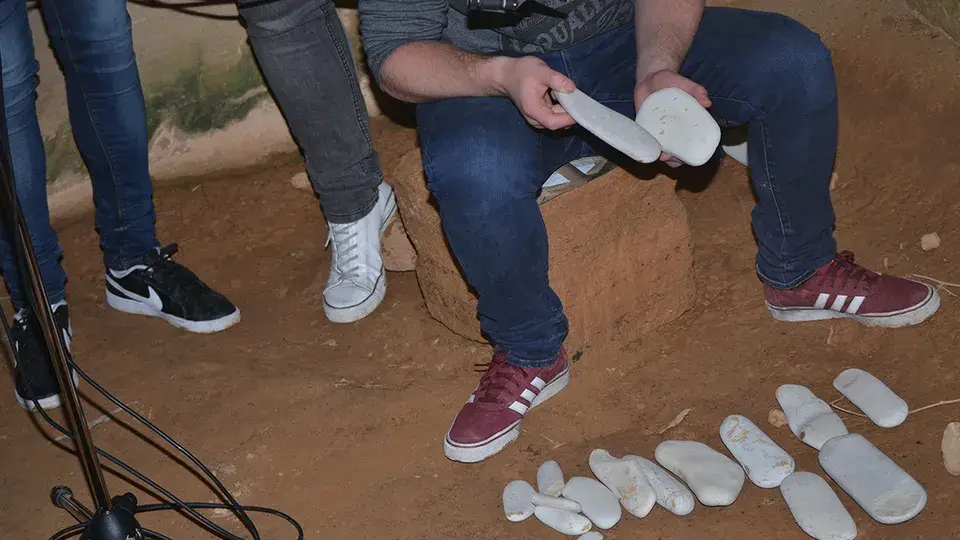
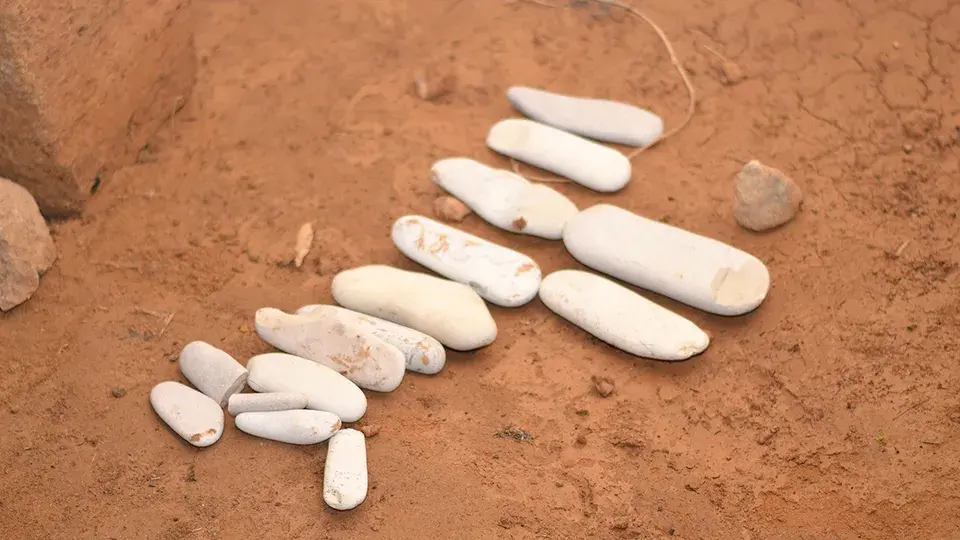
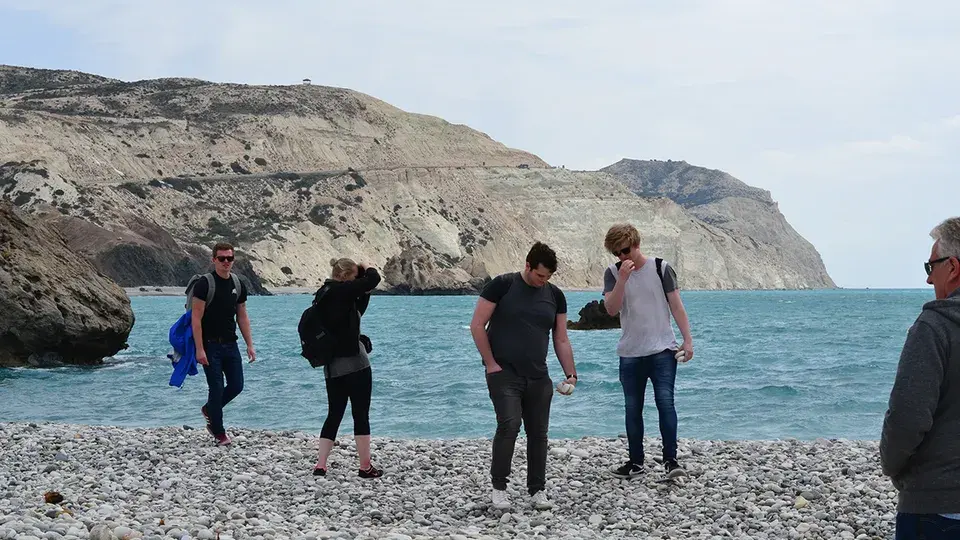

Grounded in archaeological investigations of early musical instruments and material sound production (Conard, Malina and Münzel, 2009), the research examines how natural stone resonance can be transformed into structured musical expression. Pebbles were individually assessed for pitch, resonance and tonal characteristics before being selected and arranged into a two-octave lithophone. This process investigates the relationship between geological materials, acoustic properties and intentional musical organisation.
The instrument was subsequently sampled within the Tombs of the Kings, a Hellenistic archaeological complex in Paphos. This site-specific recording methodology considers architectural acoustics as an integral component of musical identity, drawing upon archaeoacoustic research concerning relationships between sound, space and human experience (Reznikoff, 2008). The distinctive reverberation of the stone chambers contributed to the instrument’s recorded sonic characteristics, establishing a relationship between material, location and musical performance.
The resulting recordings were transformed into a playable virtual instrument compatible with contemporary digital audio workstations, enabling integration into original compositions and sound design. This approach reflects wider scholarship concerning digital cultural heritage and the reinterpretation of material environments through technological mediation (Kenderdine, 2013).
Rockenspiel contributes to artistic research by demonstrating how geographically specific materials and acoustically distinctive environments can generate new compositional resources. Its originality resides in combining natural lithophonic properties, culturally resonant locations and digital instrument development within a unified creative methodology.
Additional Information
Originality
Introduces a new virtual musical instrument derived from site-specific natural materials (lithophones), extending existing practices in sound art and composition beyond conventional sampling or synthesis.
Combines prehistoric instrument typologies (lithophones) with contemporary digital instrument design, establishing an original methodological bridge between music archaeology and music production.
Embeds mythological and geographical specificity (Aphrodite’s Rock, Cyprus) directly into the instrument’s sonic identity, treating place not as inspiration but as constitutive research material.
Develops an original hybrid tuning system that reconciles empirical acoustic testing of natural stones with historically informed understandings of pre-instrumental pitch organisation.
Advances practice-based research by positioning virtualisation as an instrument-building methodology, rather than as documentation or reproduction.
Significance
Contributes to international debates in artistic research, sound studies, and digital heritage by demonstrating how culturally significant sites can be translated into reusable creative tools without physical extraction.
Offers a sustainable model for working with culturally and archaeologically sensitive environments, aligning with ethical imperatives in contemporary heritage research.
Enables ongoing compositional, pedagogic, and creative reuse through integration with digital audio workstations, extending the life and reach of the research beyond a single artwork.
Reframes lithophones from historical artefacts into living, generative instruments, expanding their relevance to contemporary composers, sound artists, and researchers.
Aligns with Panel D priorities by evidencing research impact within and beyond the discipline, including music, heritage studies, and creative technology.
Rigour
Employs a systematic, repeatable acoustic testing methodology to identify pitch stability and timbral consistency in naturally occurring stones.
Grounds practice decisions in peer-reviewed research from music archaeology, archaeoacoustics, and digital heritage studies.
Justifies the selection of recording site (Tombs of the Kings) through established archaedoacoustic theory, evidencing intentional and research-led engagement with space.
Demonstrates methodological transparency in the transition from physical artefact to virtual instrument, including sampling, spatial capture, and digital implementation.
Integrates reflective practice with scholarly frameworks, ensuring that creative outcomes are knowledge-generating rather than purely expressive.
Bibliography
Both, A. (2015) Music Archaeology: Some Methodological and Theoretical Considerations. Berlin: Ekho Verlag.
Conard, N.J., Malina, M. and Münzel, S.C. (2009) ‘New flutes document the earliest musical tradition in southwestern Germany’, Nature, 460(7256), pp. 737–740.
Scarlett, T., Morter, J. and Papadopoulos, C. (2015) ‘Archaeoacoustics: Re-sounding material culture’, Time and Mind, 8(1), pp. 39–58.
Kenderdine, S. (2013) ‘Embodiment, entanglement and immersion in digital cultural heritage’, in Cameron, F. and Kenderdine, S. (eds.) Theorizing Digital Cultural Heritage. Cambridge, MA: MIT Press, pp. 22–41.
Related Articles
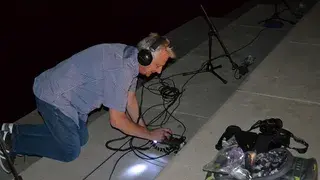
Croatia Environments - Sea Organ
Listen to Zadar’s Sea Organ through Global Sound Movement’s field recordings, capturing wave-powered harmonies along Croatia’s Adriatic waterfront.

Cypriot Santouri
Discover Global Sound Movement’s Cypriot Santouri virtual instrument, preserving its rich resonance through detailed sampling for music and sound design.
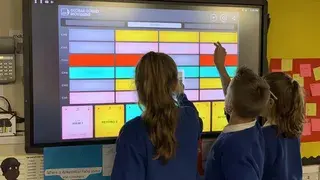
GSM Player
Create music with the GSM Player, Global Sound Movement’s browser-based sequencer. Explore global sounds and build rhythms, with no musical experience needed.