
Croatia Environments - Sea Organ
Listen to Zadar’s Sea Organ through Global Sound Movement’s field recordings, capturing wave-powered harmonies along Croatia’s Adriatic waterfront.
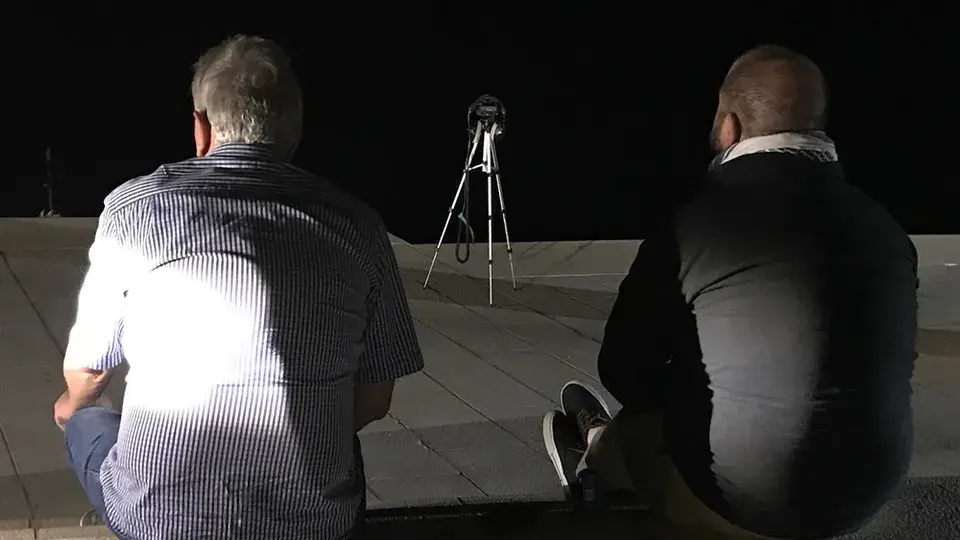
This practice-based research output documents a programme of high-resolution environmental sound recordings undertaken by the Global Sound Movement (GSM) at the Sea Organ, an internationally recognised work of sonic architecture conceived by Nikola Bašić and completed in 2005 on the Adriatic waterfront of Zadar. The Sea Organ transforms wave energy and air displacement into evolving harmonic structures through a system of tuned pipes embedded within the stepped promenade, positioning nature not the human as the sole performer.
GSM’s recordings were conducted during periods of calm sea state and minimal wind in order to achieve maximum acoustic clarity and to isolate the instrument’s intrinsic sonic behaviour. The methodology combined calibrated condenser microphones positioned across the architectural steps with hydrophones placed to capture sub-surface wave activity and pressure fluctuations. Each recording session was logged in detail, including tidal conditions, weather data, microphone placement, and duration, ensuring methodological transparency and research rigour consistent with established practices in acoustic ecology and soundscape research (Schafer, 1977; Truax, 2001).
Within UoA 34, the significance of this output lies in its contribution to practice-led research in music, sound art, and listening cultures. The archive preserves an inherently ephemeral sonic phenomenon that resists notation, repetition, or conventional musical authorship. As LaBelle (2015) argues, sound art reconfigures the relationship between place, material, and perception; GSM’s recordings provide empirical evidence of how Bašić’s architectural design enables natural forces to generate continuously variable musical form.

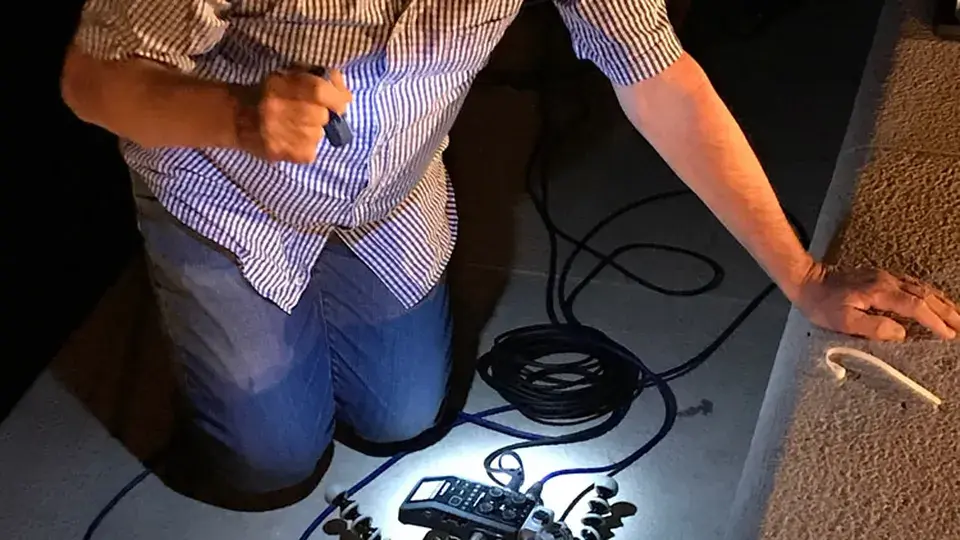
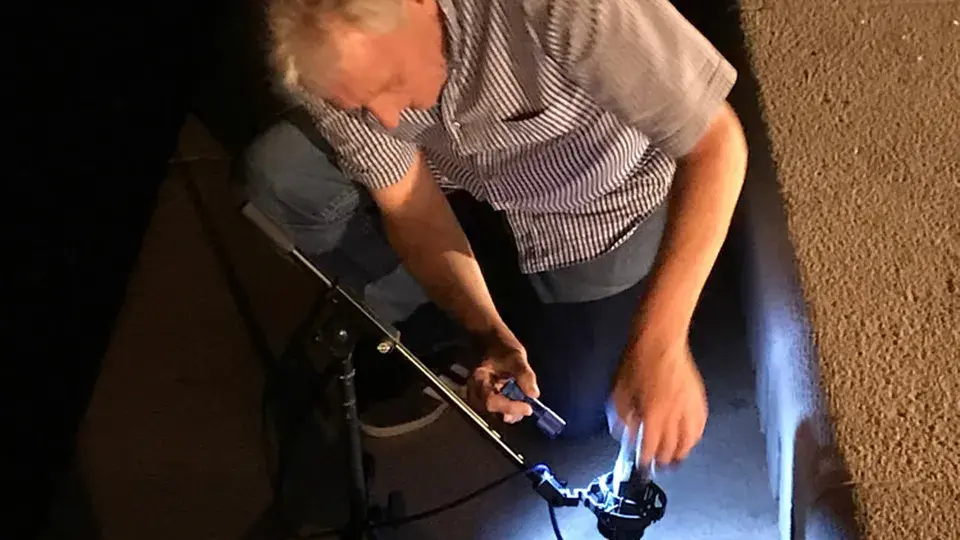
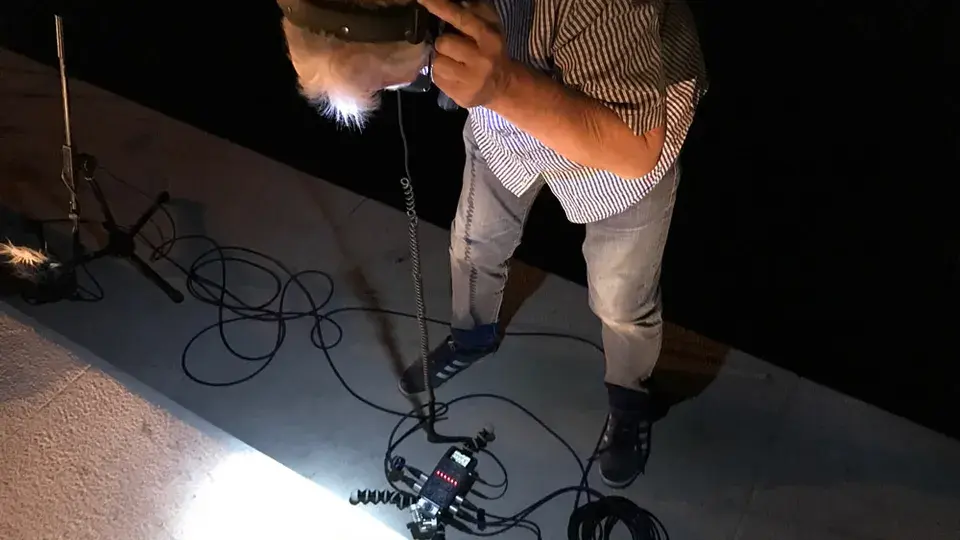
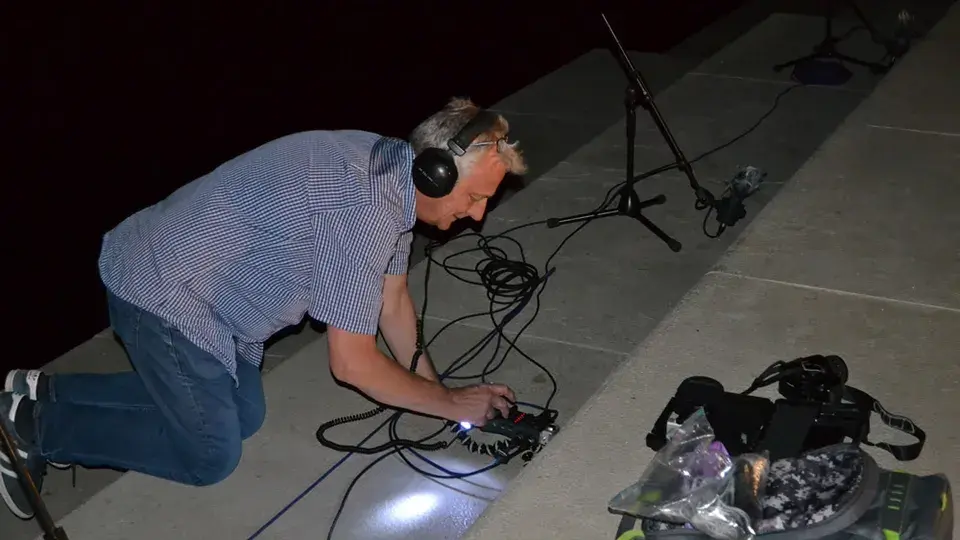
The originality of the research is located in its focus on non-human performance and environmental agency. By foregrounding listening as a mode of knowledge production, the project aligns with Voegelin’s (2010) assertion that sound operates as a critical epistemic medium. The resulting archive constitutes a durable, research-grade resource that advances international discourse on site-responsive composition, environmental sound, and the integration of natural processes into cultural production.
Shop the sounds
Croatia Atmospheres
Capturs beaches, woodlands, and iconic landmarks, these recordings reveal this Adriatic town’s vibrant and serene essence.

Water Atmospheres
Immerse yourself in the soothing and dynamic world of aquatic soundscapes - with this carefully curated collection of water-themed recordings.
Additional Information
Originality
Schafer, R.M. (1977) – The Soundscape Provides the foundational conceptual framework for understanding environmental sound as a compositional and cultural resource. GSM’s Sea Organ recordings extend Schafer’s original soundscape theory by applying it to architecturally mediated natural sound, demonstrating originality through the expansion of soundscape practice into built, non-human-performed instruments.
Voegelin, S. (2010) – Listening to Noise and Silence
Underpins the project’s originality by framing listening as a form of knowledge production rather than documentation. GSM’s archive operationalises Voegelin’s theoretical position by generating new sonic knowledge that cannot be accessed through notation, visual analysis, or architectural plans alone.
Significance
LaBelle, B. (2015) – Background Noise: Perspectives on Sound Art Establishes the international significance of sound art as a critical spatial and cultural practice. GSM’s recordings contribute directly to this discourse by evidencing how Bašić’s Sea Organ functions as a public, civic sound artwork shaped by environmental forces, enhancing understanding of place-based listening and urban sonic identity.
Bašić, N. (2006) – Morske Orgulje: The Sea Organ in Zadar Provides authoritative contextual grounding from the instrument’s architect. GSM’s archive significantly extends Bašić’s documentation by preserving the lived sonic outputs of the work over time, ensuring cultural and artistic impact beyond architectural description and tourism-based reception.
Rigour
Truax, B. (2001) – Acoustic Communication Supplies methodological rigour through established principles of acoustic ecology and environmental recording. GSM’s use of calibrated microphones, hydrophones, controlled conditions, and detailed session logging directly aligns with Truax’s criteria for systematic, repeatable sound research.
Schafer, R.M. (1977) – The Soundscape Also supports rigour by legitimising long-term, observational listening practices as valid research methods. GSM’s careful selection of calm sea states and repeatable recording protocols demonstrates methodological discipline consistent with peer-recognised standards.
Bibliography
Bašić, N. (2006) Morske Orgulje: The Sea Organ in Zadar. Zagreb: AGM.
LaBelle, B. (2015) Background Noise: Perspectives on Sound Art. New York: Bloomsbury.
Schafer, R.M. (1977) The Soundscape: Our Sonic Environment and the Tuning of the World. Rochester: Destiny Books.
Truax, B. (2001) Acoustic Communication. 2nd edn. Westport, CT: Ablex.
Voegelin, S. (2010) Listening to Noise and Silence. New York: Continuum.
Related Articles

Bali Environments
Explore Bali Environments by Global Sound Movement: field recordings capturing Bali’s villages, temples, rivers and urban soundscapes in a changing landscape.
Croatia Environments
Explore Croatia Environments by Global Sound Movement: field recordings of Zadar’s Adriatic coastline, urban life, religious festivals and cultural traditions
Morske Musak
A sonic art installation developed by the GSM that investigates the relationships between sound, architecture, environment, and participatory authorship.