
Bali Environments
Explore Bali Environments by Global Sound Movement: field recordings capturing Bali’s villages, temples, rivers and urban soundscapes in a changing landscape.
Bali Environments is a long-term sonic archive developed by the Global Sound Movement that documents urban and rural soundscapes across Bali, Indonesia, captured prior to the rapid escalation of mass tourism and the intensification of water pollution associated with coastal development. The archive constitutes a practice-as-research investigation into sound as both cultural evidence and environmental indicator, positioning listening as a method for understanding ecological and social change.
Field recordings were undertaken across villages, temples, rivers, agricultural landscapes, and urban centres, foregrounding everyday sonic practices embedded within Balinese life, including ritual, labour, and ecological interaction. Drawing on soundscape theory (Schafer, 1977; Truax, 2001), the work treats these recordings not as aesthetic artefacts alone but as forms of acoustic knowledge that register environmental balance, community rhythms, and human–nonhuman relationships. In this sense, Bali Environments aligns with recent scholarship that positions sound archives as critical tools in environmental humanities and climate research (Kelman, 2020; Gilmurray, 2022).
The project is further informed by anthropological studies of Balinese culture that emphasise the interdependence of sound, spirituality, and landscape (Tenzer, 2000; Eiseman, 1990). By documenting sonic practices tied to water systems—such as irrigation channels, rivers, and coastal zones—the archive implicitly traces the cultural consequences of environmental degradation linked to climate change and tourism-driven pollution (Cole, 2012; IPCC, 2023). These recordings therefore function as baseline acoustic data, preserving sonic conditions that are increasingly endangered.
Situated within sonic art discourse (LaBelle, 2010; Voegelin, 2014), Bali Environments contributes an ethically grounded, site-responsive methodology that bridges artistic practice, cultural documentation, and environmental research. The archive advances UoA 34 research by demonstrating how creative sound practices can operate as rigorous, reflexive methods for capturing cultural memory and ecological transformation, generating new knowledge at the intersection of art, climate awareness, and place-based listening.
Shop the sounds
Bali One Shots
This One-Shot Pack features three iconic instruments that bring the vibrant and ceremonial culture of Indonesia to life.
Bali Loops
Transport yourself to Bali with this exceptional sound library - featuring loops that celebrate the island's vibrant cultural and sonic landscape.
Additional Information
Originality
Bali Environments demonstrates originality through its use of long-form sonic archiving as a practice-as-research method that intersects sonic art, environmental humanities, and cultural documentation. While soundscape composition and acoustic ecology are established fields, this project advances them by framing pre-tourism Balinese soundscapes as both cultural memory and proto-environmental data. The archive captures sonic conditions prior to accelerated climate-related degradation, positioning listening itself as a methodological lens for understanding environmental change. This approach extends sonic art beyond representation into evidential and archival research practice.
Significance
The significance of the research lies in its interdisciplinary contribution to debates around climate change, cultural sustainability, and sensory heritage. By documenting soundscapes tied to water systems, ritual, and everyday labour, the archive preserves endangered acoustic ecologies that are increasingly threatened by pollution and mass tourism. The work has relevance beyond artistic discourse, contributing to environmental humanities, ethnography, and climate awareness by offering an alternative, sensory mode of understanding ecological loss. It strengthens UoA 34’s profile in socially and environmentally engaged creative research.
Rigour
Rigour is demonstrated through systematic field recording across multiple sites, critical engagement with soundscape theory, and sustained contextual grounding in Balinese cultural scholarship and climate research. The project applies reflective documentation, comparative listening, and theoretical triangulation, aligning practice decisions with established academic frameworks. The archive is underpinned by ethical considerations of place, authorship, and representation, ensuring methodological transparency and intellectual robustness consistent with REF expectations for practice-based research.
Bibliography
Cole, S. (2012) A political ecology of water equity and tourism: A case study from Bali. Annals of Tourism Research, 39(2), pp. 1221–1241.
Eiseman, F.B. (1990) Bali: Sekala and Niskala. Berkeley: Periplus.
Gilmurray, J. (2022) Listening to climate change: Sound, affect and environmental loss. Sound Studies, 8(1), pp. 1–16.
IPCC (2023) AR6 Synthesis Report: Climate Change 2023. Geneva: Intergovernmental Panel on Climate Change.
LaBelle, B. (2010) Acoustic Territories: Sound Culture and Everyday Life. New York: Continuum.
Schafer, R.M. (1977) The Soundscape: Our Sonic Environment and the Tuning of the World. Rochester: Destiny Books.
Tenzer, M. (2000) Gamelan Gong Kebyar: The Art of Twentieth-Century Balinese Music. Chicago: University of Chicago Press.
Truax, B. (2001) Acoustic Communication. Westport: Ablex.
Voegelin, S. (2014) Sonic Possible Worlds. New York: Bloomsbury.
Kelman, I. (2020) Disaster by Choice: How Our Actions Turn Natural Hazards into Catastrophes. Oxford: Oxford University Press.
Ghosh, A. (2016) The Great Derangement: Climate Change and the Unthinkable. Chicago: University of Chicago Press.
LaBelle, B. (2018) Sonic Agency: Sound and Emergent Forms of Resistance. London: Goldsmiths Press.
Voegelin, S. (2019) Listening to Noise and Silence: Towards a Philosophy of Sound Art. 2nd edn. New York: Bloomsbury.
Drever, J.L. and Hugill, A. (eds.) (2019) Sound, Music, Affect: Theorizing Sonic Experience. London: Bloomsbury Academic.
Bull, M. and Back, L. (eds.) (2016) The Auditory Culture Reader. 2nd edn. London: Bloomsbury Academic.
Tenzer, M. and Roeder, J. (2019) Analytical Studies in World Music, Vol. 2. Oxford: Oxford University Press.
Lansing, J.S. (2014) Perfect Order: Recognizing Complexity in Bali. Princeton: Princeton University Press.
Ryan, J.C. (2018) Plants in Contemporary Poetry: Ecology, Culture, and the Botanical Imagination. London: Routledge.
Ingold, T. (2018) Anthropology and/as Education. London: Routledge.
Related Articles

Uganda Environments, Vol 1
Explore Uganda’s rural and urban soundscapes through Global Sound Movement’s curated field recordings, capturing everyday life, music and natural environments
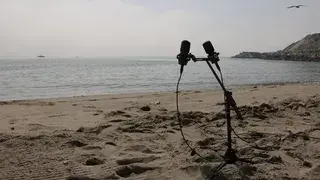
Gibraltar Environments
Explore Gibraltar’s soundscapes with Global Sound Movement: field recordings capturing caves, coastlines, wildlife, urban life and the airport.
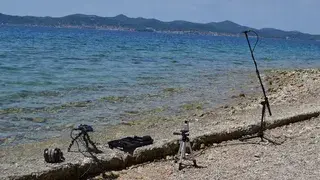
Croatia Environments
Explore Croatia Environments by Global Sound Movement: field recordings of Zadar’s Adriatic coastline, urban life, religious festivals and cultural traditions