
Croatia Environments
Explore Croatia Environments by Global Sound Movement: field recordings of Zadar’s Adriatic coastline, urban life, religious festivals and cultural traditions
Croatia Environments is a practice-as-research sonic archive developed by the Global Sound Movement that documents the acoustic identity of Zadar through sustained field recording across marine, civic, and celebratory locations. The archive captures a constellation of sounds shaped by the Adriatic Sea, urban life, and ritual practice, positioning sound as a critical medium through which place, culture, and environmental change are articulated.
The project foregrounds marine soundscapes—waves, wind, tidal surges, and resonant coastal structures—alongside human sonic activity including religious festivals, seasonal celebrations, and everyday communal rhythms. Informed by contemporary sound studies and acoustic ecology (Gallagher & Prior, 2017; LaBelle, 2022), the archive treats listening as an epistemological method, where environmental sound is understood not only as aesthetic material but as situated cultural evidence. The Adriatic coastline functions as an active sonic agent, whose acoustic behaviours are increasingly inflected by climate change, including rising sea levels, coastal erosion, and intensified storm patterns (IPCC, 2023). As such, the recordings operate as environmental testimonies, contributing to emerging discourses around sonic archives as tools for climate research and environmental humanities (Droumeva & Jordan, 2023).
The work is further contextualised by Croatia’s post-war history. Zadar’s contemporary soundscape reflects layers of rupture and renewal following World War II and the conflicts associated with the dissolution of Yugoslavia in the 1990s. Drawing on recent scholarship in post-conflict cultural memory (Palmberger, 2020; Jelača, Kolanović & Lugarić, 2021), the archive understands sound as a vehicle for collective remembrance and resilience. Bells, processions, and public celebrations emerge as audible assertions of continuity within a landscape shaped by historical trauma and political transition.
By integrating rigorous field recording practice with interdisciplinary frameworks spanning sonic art, climate studies, and post-war cultural theory, Croatia Environments constitutes an original and methodologically robust contribution to UoA 34 (Art and Design: History, Practice and Theory). The project demonstrates the significance of sonic archives as research outputs capable of generating new insights into place, environmental change, and cultural identity through listening.
Shop the sounds
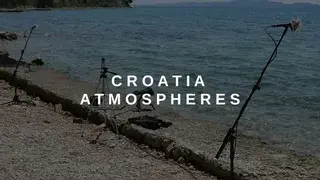
Croatia Atmospheres
Capturs beaches, woodlands, and iconic landmarks, these recordings reveal this Adriatic town’s vibrant and serene essence.

Bali Loops
Transport yourself to Bali with this exceptional sound library - featuring loops that celebrate the island's vibrant cultural and sonic landscape.
Additional Information
Originality
Gallagher & Prior (2017) and LaBelle (2022) underpin the project’s original methodological approach, validating field recording and listening as epistemic tools rather than documentation. Croatia Environments extends this work by applying sonic geography and acoustic territory theory to a post-war Adriatic coastal town, a context underrepresented in sound studies.
Droumeva & Jordan (2023) enable the project’s novel synthesis of sonic art and climate research, positioning marine sound recordings as climate-responsive cultural data. The archive advances originality by translating Anthropocene listening frameworks into a geographically specific, longitudinal sonic dataset.
Assmann (2018) supports the project’s rethinking of archives as performative and living systems. The originality lies in mobilising these ideas through sound rather than text or image, reframing cultural memory studies via sonic practice.
Significance
IPCC (2023) positions the work within globally significant climate discourse, enabling the sonic archive to function as culturally situated evidence of environmental change. This elevates the archive beyond local documentation to international relevance.
Droumeva & Jordan (2023) and LaBelle (2022) support claims that sonic practices contribute meaningfully to environmental humanities and public understanding of climate change.
Jelača et al. (2021) and Palmberger (2020) situate the research within broader debates on post-conflict culture in the Western Balkans, enhancing the archive’s significance as a contribution to understanding how cultural identity is audibly performed after political rupture.
Rigour
Gallagher & Prior (2017) provide a peer-reviewed methodological foundation for phonographic and site-based research, supporting the systematic and reflexive use of field recording techniques.
Assmann (2018) and Palmberger (2020) ensure theoretical rigour in addressing memory, trauma, and post-war identity, grounding interpretive claims in established scholarship.
IPCC (2023) anchors environmental interpretations in internationally recognised scientific consensus, strengthening the evidential basis of climate-related claims.
Jelača et al. (2021) contributes region-specific scholarly depth, ensuring cultural interpretations are historically and politically informed rather than speculative.
Bibliography
Assmann, A. (2018) Cultural Memory and Western Civilization: Functions, Media, Archives. Cambridge: Cambridge University Press.
Droumeva, M. and Jordan, R. (2023) ‘Listening in the Anthropocene: Sound, Environment, and the Climate Crisis’, Sound Studies, 9(2), pp. 143–158.
Gallagher, M. and Prior, J. (2017) ‘Sonic geographies: Exploring phonographic methods’, Progress in Human Geography, 41(5), pp. 618–637.
IPCC (2023) AR6 Synthesis Report: Climate Change 2023. Geneva: Intergovernmental Panel on Climate Change.
Jelača, D., Kolanović, M. and Lugarić, D. (eds.) (2021) The Cultural Life of Capitalism in Yugoslavia. Cham: Palgrave Macmillan.
LaBelle, B. (2022) Acoustic Territories: Sound Culture and Everyday Life (2nd ed.). New York: Bloomsbury Academic.
Palmberger, M. (2020) How Generations Remember: Conflicting Histories and Shared Memories in Post-War Bosnia and Herzegovina. London: Palgrave Macmillan.
Related Articles

Uganda Environments, Vol 1
Explore Uganda’s rural and urban soundscapes through Global Sound Movement’s curated field recordings, capturing everyday life, music and natural environments
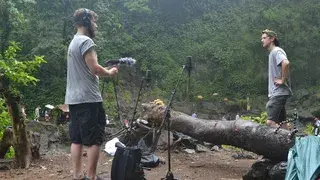
Bali Environments
Explore Bali Environments by Global Sound Movement: field recordings capturing Bali’s villages, temples, rivers and urban soundscapes in a changing landscape.

Croatia Environments - Sea Organ
Listen to Zadar’s Sea Organ through Global Sound Movement’s field recordings, capturing wave-powered harmonies along Croatia’s Adriatic waterfront.