
Sound of Heritage
A sonic heritage project capturing and preserving the sounds of Lancashire’s historic spaces through field recording, archiving, and sound practice.
Sound of Heritage is a collaborative practice-as-research project developed by the Global Sound Movement (GSM) in partnership with British-Asian musician Aziz Ibrahim. The project investigates the cultural, industrial, and sonic heritage of Lancashire through site-specific field recording, sonic archiving, and composition. Positioned within UoA 34, the research advances contemporary sound art and music practice by mobilising sound as a critical medium for interrogating post-industrial identity, memory, and multicultural histories.
GSM undertook extensive field recordings at historically significant sites. Helmshore Textile Mill, Gawthorpe Hall, and Clitheroe Castle. Capturing mechanical rhythms, architectural resonances, and environmental acoustics. Techniques included high-resolution location recording and impulse response sampling, generating a site-specific sonic archive that preserves otherwise ephemeral acoustic phenomena. These materials function not merely as documentation but as compositional resources, aligning with practice-based methodologies in sonic arts research.

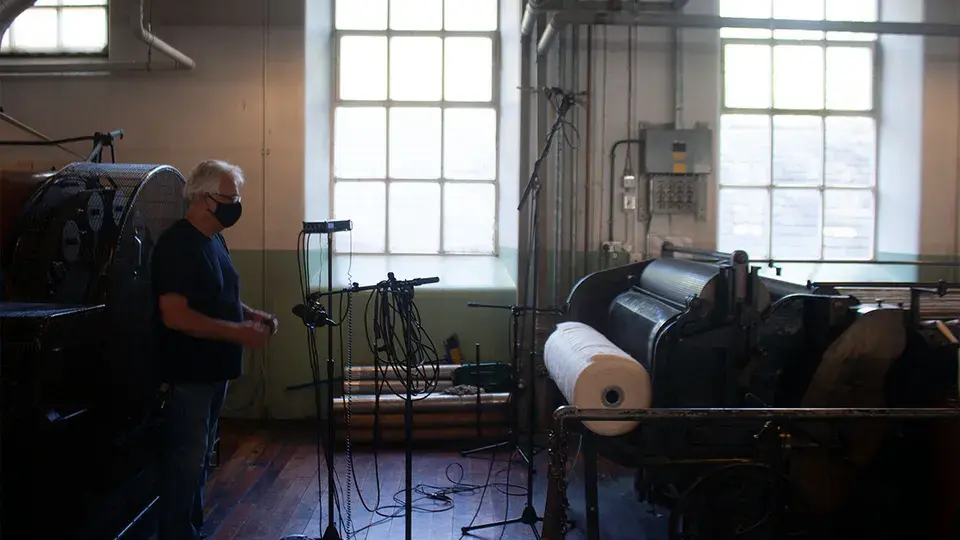
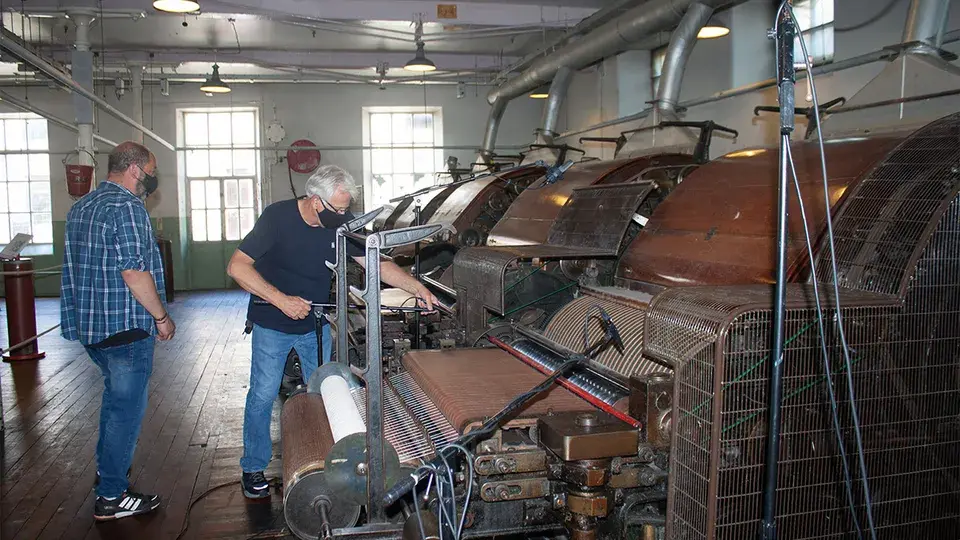
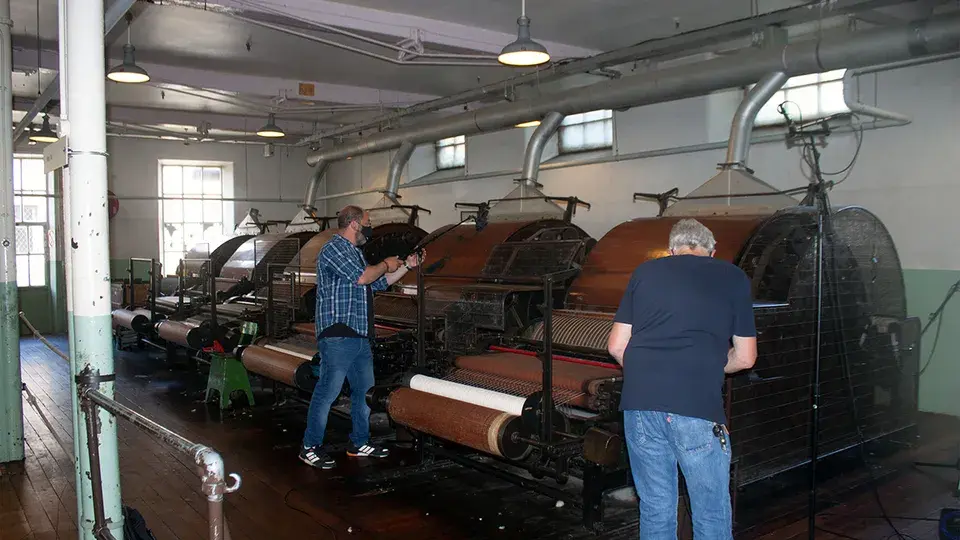
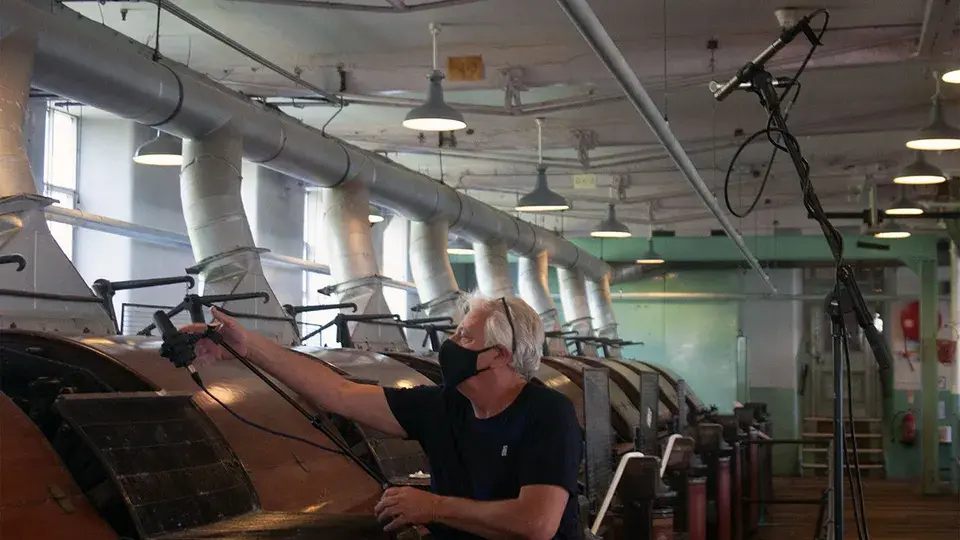
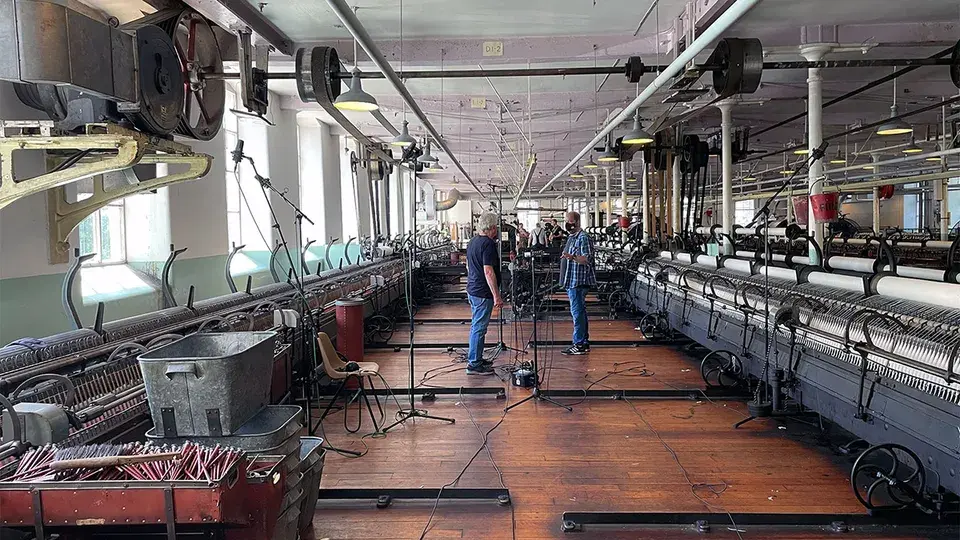

Aziz Ibrahim’s compositions reinterpret these recordings through a contemporary musical language informed by British rock, ambient music, and South Asian musical traditions. This hybrid approach situates Sound of Heritage within post-industrial and postcolonial discourses, foregrounding sound as a means of cultural translation. By recontextualising industrial machinery and architectural acoustics, the work evokes the rhythms of labour while connecting them to narratives of migration and resilience. In particular, the project references Mahatma Gandhi’s 1931 visit to Darwen, using sound to symbolically link Lancashire’s textile industry with the global histories of colonialism and Indian independence.
The research is underpinned by theories of acoustic ecology and site-specific sonic art, notably the work of R. Murray Schafer and Brandon LaBelle. Sound of Heritage contributes original knowledge by demonstrating how immersive sonic practice can function simultaneously as archive, composition, and critical historiography. It evidences how practice-as-research methodologies can reanimate heritage spaces, offering new insights into the role of sound in shaping collective memory and cultural identity.
Watch the concert
Additional Information
Evidence of Originality
Develops an original practice-as-research methodology combining site-specific field recording, impulse response capture, sonic archiving, and contemporary composition.
Advances sound art practice by treating heritage sites as compositional instruments, rather than as passive recording locations.
Introduces a novel intercultural compositional framework, integrating South Asian musical traditions with British rock and ambient forms to reinterpret UK industrial heritage.
Offers an original postcolonial sonic reading of Lancashire’s industrial history, including the symbolic integration of Mahatma Gandhi’s 1931 visit to Darwen into the compositional narrative.
Produces a reusable sonic archive that functions simultaneously as research data, creative material, and heritage documentation.
Evidence of Significance
Contributes to contemporary scholarship in sound studies, music practice, and heritage research by foregrounding listening as a mode of historical and cultural inquiry.
Demonstrates the value of practice-as-research within UoA 34 for generating new knowledge about post-industrial and multicultural identities.
Provides a transferable model for engaging non-specialist publics with industrial heritage through immersive, sound-based practices.
Reframes regional heritage (Lancashire) within global historical and cultural contexts, reinforcing the international relevance of place-based research.
Aligns with sector priorities around intangible cultural heritage, public engagement, and inclusive cultural narratives.
Evidence of Rigour
Employs established and transparent methodologies from acoustic ecology and sonic arts research, including high-resolution location recording and impulse response sampling.
Demonstrates systematic and reflective compositional processes, with documented selection, transformation, and contextualisation of recorded materials.
Is underpinned by sustained engagement with recognised scholarship in sound art, acoustic ecology, and cultural history (e.g. Schafer, LaBelle, Kahn).
Evidences critical reflection through the positioning of creative outputs as generators of knowledge rather than illustrative artefacts.
Establishes a replicable practice-as-research framework, supporting the robustness and credibility of the research outcomes.
Buy the album
Industry Atmospheres
Step into a world of industrial history - featuring ambient recordings captured in the mills of northwest Lancashire, England. These evocative soundscapes preserve the acoustic essence of bygone textile industries, with the rhythmic clatter of cotton machines, the whir of sewing machines, and the ambient hum of machinery resonating through old factories and workshops.
- Each recording was captured on location, preserving the authenticity and natural acoustics of these historic spaces.
- In Lancashire, the sounds reflect the heart of England’s industrial revolution, with the steady pulse of machinery embodying the era’s innovation and labor.
Perfect for filmmakers, sound designers, and history enthusiasts, this library delivers an unparalleled, immersive experience of two distinct yet interconnected industrial legacies.
Related Articles

Hidden Melodies
Explore Hidden Melodies, a GSM research project documenting and preserving endangered musical traditions, cultural identities, and rare sonic heritage.

Morske Musak
A sonic art installation developed by the GSM that investigates the relationships between sound, architecture, environment, and participatory authorship.